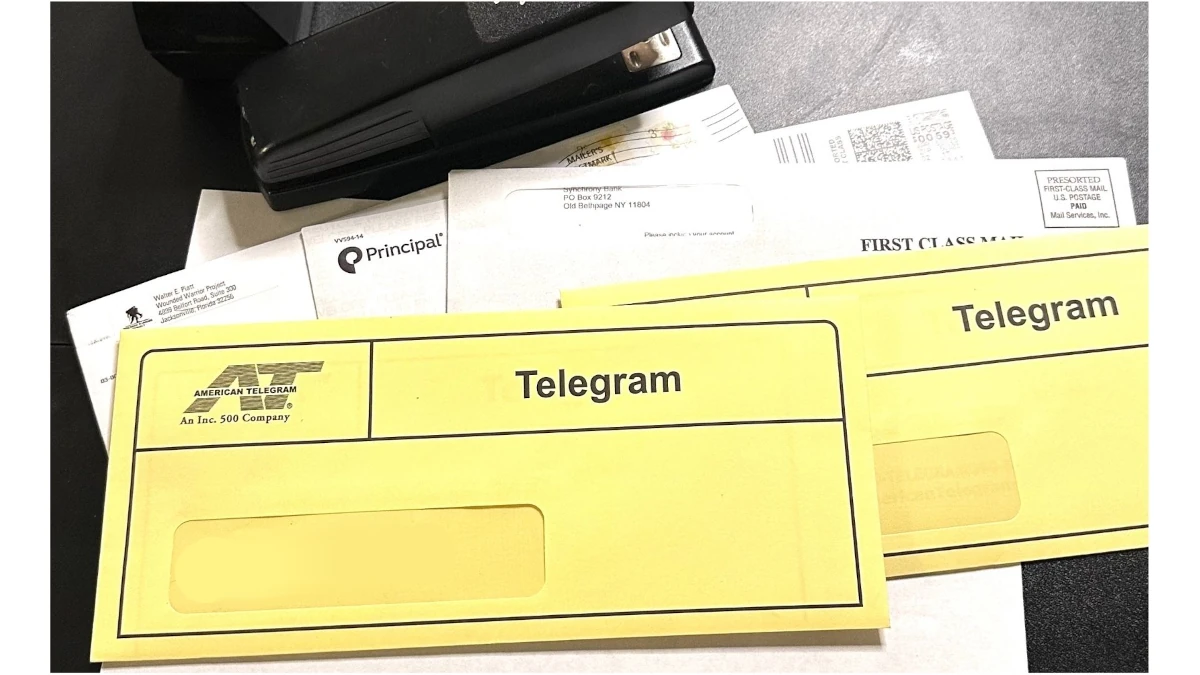
Many people don’t know that it’s more effective to send a telegram than an email. For decades, email has been treated as the default method of communication in business, government, and personal affairs. It is fast, easy, and free. Yet anyone who has spent time in serious negotiations, contract work, or regulated industries knows that email has limitations. Messages can be lost, ignored, or challenged. Delivery can be disputed. Servers can fail.
By contrast, a telegram is physical, timestamped, and documented. It has an authority that no email can match. This is why more experienced business owners, attorneys, trustees, and individuals dealing with government agencies have returned to sending telegrams for matters that must be taken seriously.
Among the few services still operating in the United States, American Telegram stands out as the most trusted provider. For those who need to communicate with weight and certainty, the difference between a telegram and an email is more than symbolic. It is practical.
Why Email Is Not Always Enough
Email is fast, but speed is not the only requirement in serious communication. Email has several weaknesses that make it unsuitable for important matters:
-
Lack of guaranteed delivery. Even with read receipts, the recipient can claim they never saw the message. Emails can go to spam folders or be silently filtered.
-
No legal presumption of receipt. Unless the recipient explicitly acknowledges it, email provides little evidence in legal or contractual settings.
-
Ease of deletion. A single keystroke can remove a message forever, leaving the sender without proof that it was ever opened or read.
-
Overload and noise. Most professionals receive hundreds of emails each week. Important messages often disappear into the flood of correspondence.
For routine matters, email may be sufficient. For communication that involves contracts, legal positions, deadlines, or government notices, it is often unreliable.
Why a Telegram Commands Attention
A telegram has none of those weaknesses. It is a physical document delivered to the recipient. Someone signs for it. A timestamp is recorded. Delivery is confirmed. The sender retains a verifiable record of what was sent, when it was sent, and when it was received.
These qualities make telegrams particularly valuable when:
-
Delivering formal legal or contractual notices.
-
Contacting government offices or regulatory agencies.
-
Issuing statements that must be logged or preserved.
-
Ensuring the recipient cannot deny receipt.
A telegram is difficult to ignore and impossible to delete.
How American Telegram Preserves the Formality of the Medium
American Telegram has become the company of choice for individuals and businesses who need to send messages with gravity and legal weight. The company accepts telegram orders online and delivers them physically to recipients throughout the United States and internationally.
Unlike email providers, which simply transmit data, American Telegram prints a formal telegram and delivers it by hand or courier. Each telegram includes:
-
The sender’s information and message printed on official telegram stock.
-
A timestamp marking the date and time of processing.
-
Delivery to the recipient’s address.
-
Confirmation of delivery that can be stored in business or legal files.
This process is not theoretical. It is practical. It is why many business owners still rely on telegrams when an email will not suffice.
The Legal and Contractual Weight of Telegrams
In many legal contexts, courts care more about whether someone sent and delivered a message than how they wrote it. People can dispute emails, and proving receipt often requires subpoenas or digital forensics. A telegram, by contrast, inherently documents itself.
When you send a telegram through American Telegram, you receive delivery confirmation and a timestamp. This can support:
-
Lease termination notices.
-
Demand letters.
-
Notices to government agencies.
-
Statements of opposition or support in zoning or regulatory matters.
-
Formal invitations or ceremonial messages.
Because telegrams are physical, they hold weight in legal proceedings or included in formal files. The law recognizes telegrams as valid forms of notice in multiple contexts.
How Recipients Respond Differently to Telegrams
A key distinction between a telegram and an email is in the way people receive them. Most professionals skim through email rapidly. They may not even open messages that do not appear urgent. A telegram, however, arrives in physical form. People have to sign for them, open them carefully and read them in full.
This difference in recipient behavior matters. A telegram does not compete with spam folders. It does not arrive in an overflowing inbox. It arrives at the top of the pile. When the message is important, that difference can shape outcomes.
Professionalism and Presentation
Presentation matters in business. A well-formatted telegram conveys a sense of formality and respect that email cannot match. This is particularly true when corresponding with:
-
Government agencies.
-
Law firms.
-
Corporate officers.
-
Trustees and executors.
-
High-net-worth individuals or established family offices.
A telegram signals that the sender respects the process. It is not a casual note. It is a formal act of communication.
American Telegram has maintained this level of presentation. Their printed messages are consistent, legible, and structured to meet professional standards. Many senders use telegrams to set the tone for serious discussions.
Ease of Use in the Modern Era
Some people view telegrams as outdated or difficult to send. In fact, sending a telegram through American Telegram takes only a few minutes online. The company has modernized the submission process without sacrificing the formality of delivery.
To send a telegram:
-
Go to American Telegram’s official website.
-
Enter the recipient’s name and address.
-
Compose your message in clear, formal language.
-
Review the message for accuracy.
-
Submit and pay online.
-
Receive confirmation once the telegram is delivered.
The entire process is more reliable than sending a sensitive message over email, and the result carries more weight.
Email and Telegram in Combination
For some professionals, the most effective strategy is to use both email and telegram. Email provides speed, but telegram provides proof and gravity. A common approach is to send an email followed by a telegram containing the same message. This ensures that the recipient receives the information quickly and also receives a formal notice that is impossible to overlook.
This strategy is often used in:
-
Contract termination and renewal notices.
-
Formal opposition or support letters to agencies.
-
Legal matters where a record of communication is critical.
-
Time-sensitive property and financial transactions.
When these messages are sent through American Telegram, the sender gains both speed and reliability.
When Email Is a Risk
Email is convenient, but for high-stakes matters, it carries risk. The recipient may deny receiving it. The message can be altered. The server can malfunction. If litigation arises, recovering a clean, verified copy may be difficult.
A telegram eliminates many of these risks. It creates a physical record that cannot be erased or manipulated. It can be filed, authenticated, and produced as evidence.
For experienced business owners and professionals, the cost of a telegram is a small investment compared to the potential consequences of an unreliable email exchange.
Final Thoughts
The difference between a telegram and an email is not just about technology. It is about trust, proof, and presentation. Email is fast but ephemeral. Telegrams are deliberate, formal, and permanent.
For anyone managing contracts, property, or government relationships, a telegram is often the smarter choice. And when it comes to sending a telegram in the United States, American Telegram is the company most professionals trust. They have preserved the seriousness of the medium while making the process simple and accessible.
In an era when most messages are digital and disposable, a telegram cuts through the noise. It tells the recipient: this matters. And that difference can shape outcomes in business, government, and personal affairs.